DealRoom vs Ansarada: Which VDR Is Right for Small Investment Banks? (2026)
DealRoom vs Ansarada: Which VDR Is Right for Small Investment Banks? (2026) The decision usually surfaces after a deal closes — not during one. An advisor reflects on which parts of the process created friction, and the virtual data room sits near the top of the list more often than clients expe
Quick answer
Is DealRoom better than Ansarada for boutique investment banks?
Yes. DealRoom's integrated diligence checklist and intuitive UI offer superior workflow efficiency for small deal teams, whereas Ansarada is a more complex legacy platform with page-count pricing risks.
Topics covered
- Why This Comparison Matters for Boutique Advisors
- DealRoom vs Ansarada: What Real Users Say
- Diligence List Management & UI Comparison
- How AIVI Streamlines Your VDR Diligence Workflow
Is DealRoom cheaper than Ansarada in 2026?
DealRoom typically offers a flat-rate pricing model which is more cost-effective for boutique M&A. Ansarada often charges based on page counts or storage packages, which can scale up quickly.
Which VDR platform has better AI features?
Ansarada has a legacy AI-assisted checklist. DealRoom has basic smart search. For advanced document risk scoring and automated redaction, integrating AIVI's VDR Kanban is highly recommended.
DealRoom vs Ansarada: Which VDR Is Right for Small Investment Banks? (2026)
The decision usually surfaces after a deal closes — not during one. An advisor reflects on which parts of the process created friction, and the virtual data room sits near the top of the list more often than clients expect. The file that took too long to upload. The buyer group that couldn't find the financial model. The notification emails that arrived at the wrong time or not at all.
Both DealRoom and Ansarada have been in the M&A VDR space long enough to accumulate real user feedback. Neither is perfect. And for boutique investment banks running four to twelve sell-side transactions a year, the wrong choice has compounding consequences — not in a dramatic deal-breaking way, but in the kind of slow administrative friction that quietly drains advisor capacity over months.
This comparison is grounded in verified G2.com user reviews from 2024–2026, combined with observations from lower-middle-market sell-side workflows. The goal is to give you a clear picture of where each platform performs, where it falls short, and what that means for a firm your size.
Free Resource: Use our Exit Readiness Scorecard before you open any data room. Knowing your deal's weak points before buyers do is the single most effective way to protect your multiple.
Why This Comparison Matters for Boutique Advisors in 2026
The SEC's disclosure requirements under Regulation S-K have not become simpler, and the document request lists that buyers send in 2026 are meaningfully longer than they were five years ago. A boutique advisory firm assembling a VDR for a $15M–$35M business is now routinely managing 200 to 300 discrete line items before the first buyer enters the room.
That context matters for the platform decision because DealRoom and Ansarada were built with different assumptions about who their user is. Ansarada was originally designed for larger transactions — mid-market to large-cap — and scaled down to accommodate smaller firms. DealRoom built from a different angle, combining diligence list management with file storage in a way that resonated with smaller advisory teams running leaner processes.
Neither positioning is wrong. But they create real differences in day-to-day usability for the boutique segment.
What Real Users Say: Two Platforms, Two Realities
The DealRoom Experience: Capable, But Brand-Constrained
A verified DealRoom user in investment banking described the platform in a 2018 G2 review as "the dataroom of the future" — specifically praising the ability to manage diligence lists inside the same platform as the file storage. The upload queue was intuitive. The analytics showed who accessed what and when. For advisors who had previously managed their diligence list in a separate Excel spreadsheet, the integration was a genuine workflow improvement.
The same user noted the early-stage friction: the platform was new enough that clients didn't recognize the name, which created awkward conversations during onboarding. Multiple reviewers across different years flag the same issue — explaining DealRoom to a client requires extra effort because the platform lacks the brand recognition that Intralinks or Datasite carry.
For boutique advisors, that brand gap is manageable. Your clients are trusting your judgment, not the platform's logo. What matters more is whether the tool works cleanly under deal pressure — and the DealRoom reviews suggest it generally does, with some caveats around notification management and initial configuration complexity.
The Ansarada Experience: Established, But Aging
Ansarada's user base is broader and its review history longer. The pattern that emerges from 2025 and 2026 G2 reviews is consistent: the platform does what it promises, but what it promises has not kept pace with what modern sell-side workflows require.
One CEO at a small business, reviewing the platform in April 2026, described the interface as feeling like "a product from the early 2000s." A second reviewer in financial services noted that Ansarada's AI features — marketed prominently — "offer almost no real intelligence or automation." A third described the pricing as "surprisingly high given the outdated experience."
That is not a damning verdict on the platform's core functionality. Files get uploaded. Permissions get set. Buyers get access. The data room does what a data room needs to do. The question for boutique advisors is whether "does what it needs to do" justifies the pricing and the UI friction when alternatives exist.
Most advisors who have used both platforms describe Ansarada as the safer institutional choice and DealRoom as the more practical one for smaller deal teams. Neither description is an endorsement.
Feature-by-Feature Evaluation for Boutique Advisory Firms
Diligence List Management
This is DealRoom's strongest differentiator. The ability to import a due diligence checklist — either from Excel or from a template — and have it automatically generate a request list with direct file upload capabilities is a genuine workflow advantage. One reviewer described uploading their existing diligence Excel and watching it convert into actionable items with folder links. Advisors who have spent hours manually matching buyer requests to VDR folders will understand why that matters.
Ansarada handles diligence lists as a separate workflow. The connection between the request list and the file repository requires more manual coordination.
User Interface and Client Onboarding
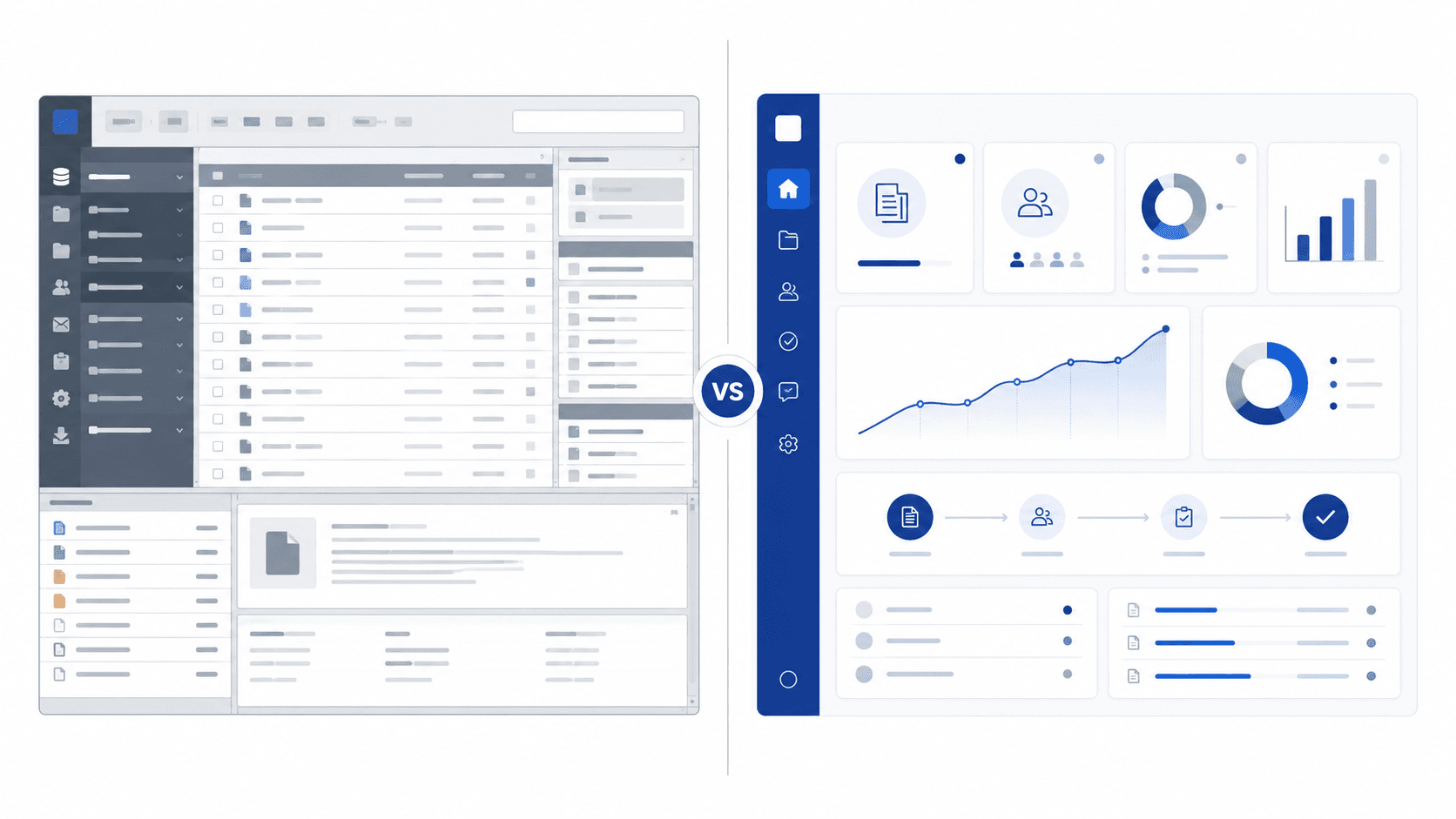
DealRoom is simpler to navigate. Multiple reviewers note that the drag-and-drop file upload and folder organization feel intuitive. Ansarada's interface is more complex — not unusable, but requiring more clicks and more explanation for clients and buyers who encounter it for the first time.
Both platforms have room to improve on mobile — an increasingly relevant consideration as advisors do more deal management from phones during travel.
Notification and Alert Management
This is a weak point for both platforms, in opposite directions. DealRoom users report receiving too many email notifications with limited ability to configure frequency or grouping. Ansarada users report the opposite — inconsistent alerts that require manual checking to stay current. Neither platform offers the kind of daily digest or key-event-only notification filtering that would actually match how busy advisors want to receive information.
Pricing Transparency
DealRoom's pricing is more accessible for smaller deal teams than Ansarada's. Neither platform publishes full pricing publicly, but DealRoom users consistently describe it as more reasonable for the boutique segment. Ansarada's storage caps and overage fees create cost unpredictability that several reviewers explicitly flag.
⚠️ Common Mistake: Evaluating pricing based on the base subscription without accounting for storage overages or premium add-on features. Both platforms have cost structures that look different at 100 documents versus 300.
Before executing your VDR setup and pricing negotiations, M&A advisors can also run corporate risk analyses and calibrate cost of capital parameters using our interactive WACC calculator to ensure valuation models match capital structures.
DealRoom vs Ansarada: A Direct Comparison
DealRoom
- Best for: Advisors who want diligence list and VDR in one workflow; smaller deal teams running lean processes
- UI quality: Functional and intuitive, not visually modern but operationally clean
- AI features: Minimal; the platform is primarily a workflow tool, not an AI product
- Pricing: More accessible for boutique volume; still not fully transparent
- Brand recognition: Limited; requires client education
Ansarada
- Best for: Advisors whose clients or counterparties expect a recognized brand; larger transaction volumes
- UI quality: Functional but dated; significant user interface criticism in recent reviews
- AI features: Marketed heavily, received poorly; reviewers describe Aida as unreliable
- Pricing: Higher than comparable alternatives; storage-capped model creates overage risk
- Brand recognition: Stronger than DealRoom; still well below Datasite and Intralinks
Where AIVI Fits in This Decision
The honest answer is that DealRoom and Ansarada both solve a version of the problem. Neither solves the version that boutique advisors are increasingly dealing with: the need for a platform that combines clean file management, genuine AI output, and predictable pricing in a single workflow.
Advisory teams using AIVI's VDR remediation Kanban board can import their diligence checklist — including checklists previously managed in Excel — and track item completion against uploaded files in real time. That is the core DealRoom workflow advantage, built into a platform that also includes automated CIM generation and a task card system that shows priority, folder path, and assigned party on a single screen.
AIVI's boutique-friendly pricing starts at $199/month with no storage overages and no annual contract requirements. The comparison to Ansarada's pricing — for advisors who have navigated those conversations — tends to be straightforward.
Frequently Asked Questions
Is DealRoom better than Ansarada for small investment banks?
For boutique advisors running three to ten deals a year, DealRoom's integrated diligence list management is a meaningful operational advantage over Ansarada's more complex workflow. That said, DealRoom's limited brand recognition can create friction when working with clients or buyers who expect familiar platform names. If your client relationships are strong enough that the software vendor doesn't matter, DealRoom is the more practical choice. If institutional brand recognition is part of what your clients expect from the process, Ansarada or Datasite may be a better fit.
How does DealRoom's pricing compare to Ansarada?
Neither platform publishes standard pricing publicly. DealRoom is consistently described by users as more accessible for smaller deal volumes. Ansarada's pricing is higher at the entry level and includes storage caps that can create additional costs mid-deal. For boutique firms, the unpredictability of Ansarada's cost model is often cited as a reason for switching platforms.
Does either platform have genuine AI features?
DealRoom does not position itself primarily as an AI tool — it is a workflow and document management platform. Ansarada markets AI features aggressively but has received significant user criticism for unreliable output. Neither platform, as of current G2 reviews, provides the kind of AI-driven insights — EBITDA normalization, document risk scoring, CIM generation — that advisors would need to materially reduce their preparation time.
What happens to my data if I switch platforms?
Both platforms allow file exports. The practical transition work involves re-permissioning buyer groups, re-building folder templates, and re-sending access links. Most advisors execute transitions between deals rather than during active processes. Maintaining a standardized folder template and checklist in a shareable format (Excel or CSV) simplifies future migrations regardless of which platform you're on.
Are there better VDR alternatives to both DealRoom and Ansarada?
For boutique advisory firms whose primary needs are modern UI, genuine AI features, and transparent pricing, both DealRoom and Ansarada have meaningful limitations. Platforms built specifically for the boutique segment — rather than scaled down from enterprise products — tend to offer more practical workflows at lower price points. The key is evaluating against your actual deal volume and client profile rather than against the feature sets that enterprise platforms use to justify enterprise pricing.
Disclaimer: The financial and legal information provided in this article does not, and is not intended to, constitute professional legal or financial advice; instead, all information, content, and materials available on this site are for general informational purposes only. Readers should contact their legal counsel or certified public accountant to obtain advice with respect to any particular transaction or regulatory matter.
Ready to automate M&A drafting & secure transaction readiness?
AIVI empowers boutique M&A firms and investment banks to generate CIMs, conduct instant VDR gap checks, and manage exit readiness automatically from a unified data model.