Enterprise to Equity Value
Buyers buy the Enterprise Value. The cash you put in your bank is the Equity Value, calculated after paying off bank loans and adding net cash.
Estimate your after-tax cash proceeds. Compare Stock vs. Asset sales structures, audit M&A advisory success fees, and visualize your final transaction payout.
Model Exit Proceeds & Tax Leakage
Asset transactions usually transfer tax liabilities to corporate assets, incurring double taxation. Consider structuring deals as Stock sales if tax-efficiency is a priority.
Get an instant AI exit analysis diagnosing tax loopholes and advisory friction points.
Buyers buy the Enterprise Value. The cash you put in your bank is the Equity Value, calculated after paying off bank loans and adding net cash.
Stock structures command long-term capital gains tax rates. Asset sales incur corporate-level double taxation and ordinary rate recaptures.
Middle-market transaction success fees scale between 3% to 6%. Having a clear deduction timeline prevents cash shortages at the closing table.
In M&A negotiations, buyers quote an Enterprise Value (EV). However, what you actually take home depends on your balance sheet at closing. Most private transactions are executed on a cash-free, debt-free basis. This means the seller must pay off all outstanding bank loans, lines of credit, and debt-like liabilities, while keeping the operating cash.
The resulting figure is your Equity Value:
The legal structure of your transaction has massive tax implications.
Buyers strongly prefer asset sales because they can step up the tax basis of the acquired assets to fair market value and claim high depreciation deductions. Sellers should seek a valuation premium if forced into an asset structure.
AIVI empowers boutique M&A firms and investment banks to generate CIMs, conduct instant VDR gap checks, and manage exit readiness automatically from a unified data model.
Beyond taxes, advisory transaction costs are another major friction point. In typical lower-middle market transactions, M&A brokers, investment bankers, CPAs, and legal counsels charge success fees. Bankers typically charge a percentage of enterprise or equity value (ranging from 3% to 6%), while legal and accounting costs are billed hourly. Having a clear visualization of these outflows ensures no surprises at the closing table.
Most M&A contracts include a working capital peg mechanism. If the business delivers more or less working capital than a pre-agreed target on the closing date, the purchase price is adjusted dollar-for-dollar. Sellers who understand this mechanism can proactively manage receivables, payables, and inventory levels in the months before closing to avoid post-close price reductions.
Quantify Enterprise Values, verify due diligence books, and estimate strategic synergy premiums in real-time.
Model Enterprise Value and EBITDA multiples based on cash-flow parameters.
Reconcile VDR files and CIM statements to check QofE due diligence clawbacks.
Verify exit-readiness parameters, customer concentrations, and legal roadblocks.
Estimate annual cost reductions and customer cross-sell synergy values.
Leverage branded diagnostic assessments, AI drafting tools, and shared client collaboration channels.

Turn exit diagnostics into structured Confidential Information Memorandums automatically.

Mapstrategic buyer synergies and justify exit premium values across 6 dimensions.
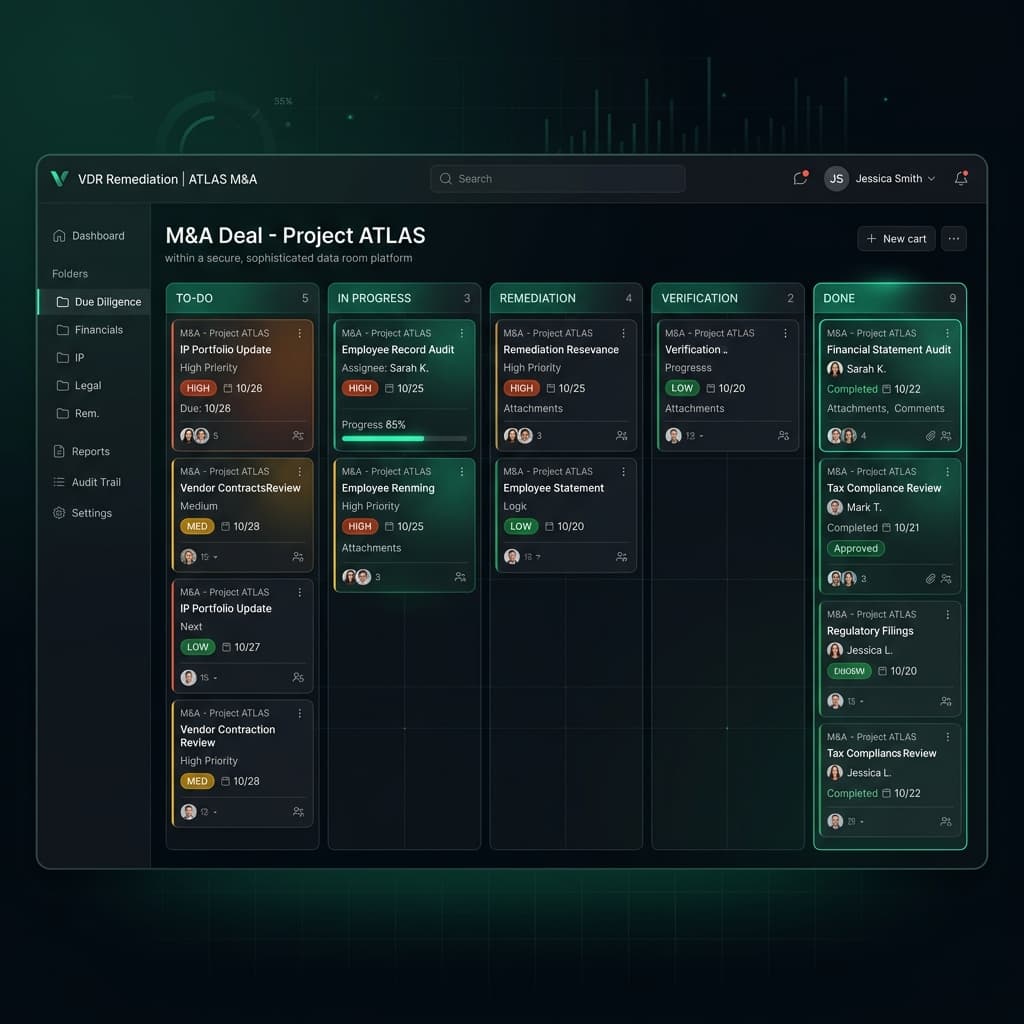
Convert diagnostic risk findings into white-labeled seller remediation workflows.

Guide draft output tone with your boutique firm's custom brand vocabulary rules.
Read advanced articles written by tech corporate advisors covering escrow, EBITDA multiples, and transaction logs.
 M&A Diligence
Step-by-step best practices to structure folders, manage user permissions, and ensure secure buyer access.
 Valuation
A practical breakdown of valuation approaches owners and advisors use before a sale process.
 Deal Structuring
How AI-assisted CIM workflows reduce drafting time while keeping deal materials consistent.