eCommerce Valuation Multiples: Accounting for Inventory and CAC

eCommerce Valuation Multiples: Accounting for Inventory and CAC
In early 2026, private business sales require transaction teams to maintain credibility. Imagine a boutique M&A advisor representing an online cosmetics brand in California. The advisor presented a valuation proposal using an EBITDA multiples framework that assumed a flat 8.5x multiple. During confirmatory due diligence, the buyer’s Quality of Earnings (QofE) team discovered that the customer acquisition cost (CAC) calculations omitted retargeting ad spend and slow-moving inventory was over-valued by $800,000, throwing out the premium multiple and reducing the purchase price by $2.2 million.
To protect transaction value, sell-side deal teams must compile supporting records before starting marketing. Using our interactive EBITDA valuation calculator helps advisors verify which metrics are allowable. Eliminating errors in the ecommerce valuation multiples ensures that your adjustments survive buyer audits.
Free Resource: Map your industry metrics and calculate a defensible EBITDA bridge using our interactive EBITDA valuation calculator.
Why Ecommerce Valuation Multiples Has Become Critical for M&A Advisors in 2026
Under transaction audit guidelines managed by the Securities and Exchange Commission (SEC), corporate buyers must analyze the sustainability of a target’s digital cash flows. For private eCommerce brands, historical profit and loss (P&L) statements reflect tax-minimization strategies rather than economic reality. Private owners often run personal vehicles, social media influencer perks, and personal travel through corporate accounts, which lowers reported profits.
Under tax regulations monitored by the Internal Revenue Service (IRS), digital marketing deductions must meet business use standards. In a brand sale, these discretionary perks will not transfer to the buyer. Therefore, sell-side advisors must identify and add back these expenses to present a normalized EBITDA profile that reflects the true earning power of the brand.
Under transaction audit guidelines managed by the Securities and Exchange Commission (SEC), corporate buyers must analyze the sustainability of a target’s cash flows. For private firms, historical profit and loss (P&L) statements reflect tax-minimization strategies rather than economic reality. Private owners often run personal vehicles, country club memberships, and personal travel through corporate accounts, which lowers reported profits.
Under tax regulations monitored by the Internal Revenue Service (IRS), business deductions must meet business use standards. In a business sale, these discretionary perks will not transfer to the buyer. Therefore, sell-side advisors must identify and add back these expenses to present a normalized EBITDA profile that reflects the true earning power of the company.
Case Studies: How Ecommerce Valuation Multiples Failures Cost Sellers Millions
Real-world transaction outcomes highlight the value of compiling supporting records during due diligence.
Case Study: The Miscalculated Customer Acquisition Cost (CAC) Hit
Problem: A boutique advisory firm represented a West Coast apparel DTC brand with $10M revenue. The analyst added back $150,000 in digital ad expenses without cohort details.
Action: During due diligence, the buyer’s compliance team discovered that the marketing expenses were required for core retention, rejecting the entire add-back.
Result: Reversing the adjustments reduced the purchase price by $1.1 million, delaying the closing timeline by three months. The seller accepted the reduction because they could not prove the underlying records were entirely compliant.
How It Should Be Done: Audited Inventory Controls to Secure Premium Exit
Problem: An online consumer electronics brand in New Jersey sought an exit. The warehouse inventory levels were unaudited.
Action: The sell-side advisor categorized $120,000 in owner discretionary benefits, organizing the inventory valuations and tax returns into a dedicated virtual folder.
Result: The advisor presented a verified add-back bridge. The buyer accepted the adjustments, allowing the deal to close on schedule at a premium 7.2x EBITDA multiple. The advisor presented a detailed, verified add-back bridge. The buyer accepted the adjustments, allowing the deal to close on schedule.
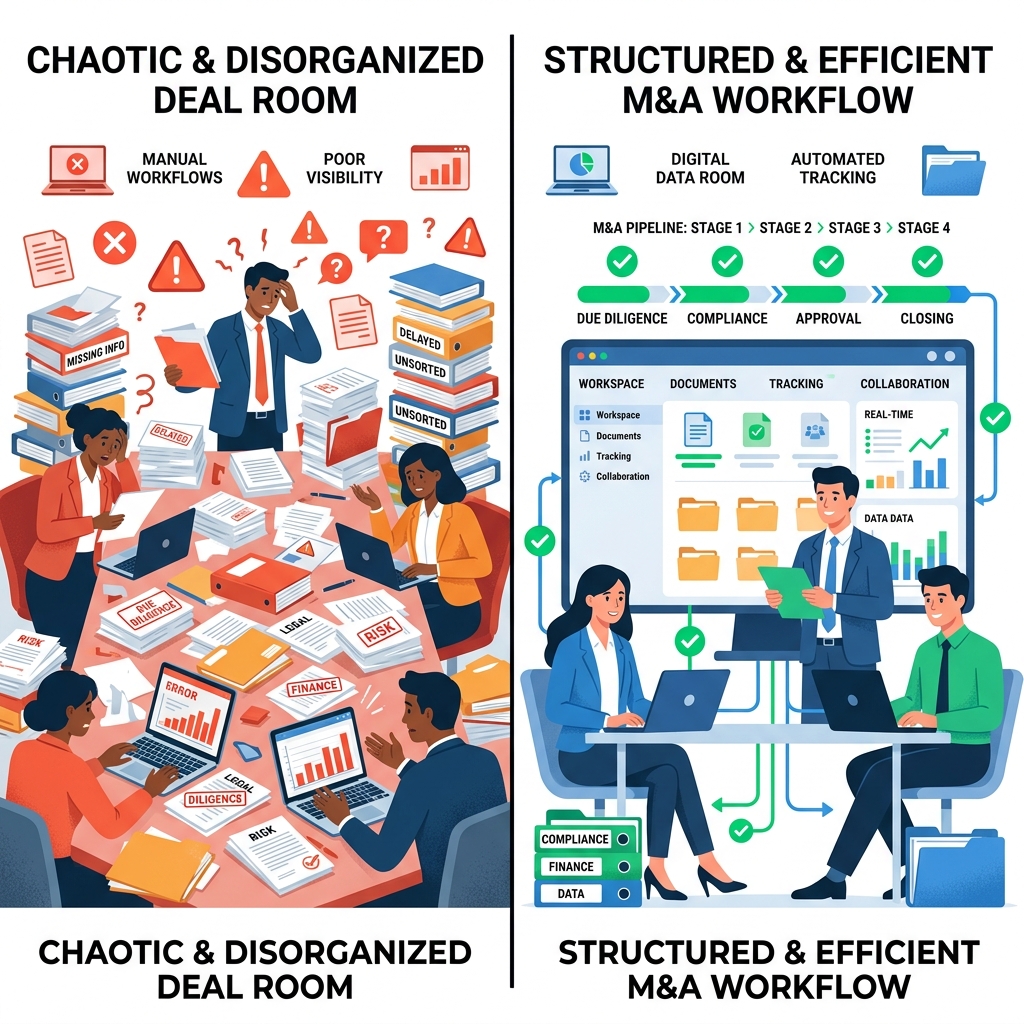
Operational Step-by-Step Checklist for M&A Advisors
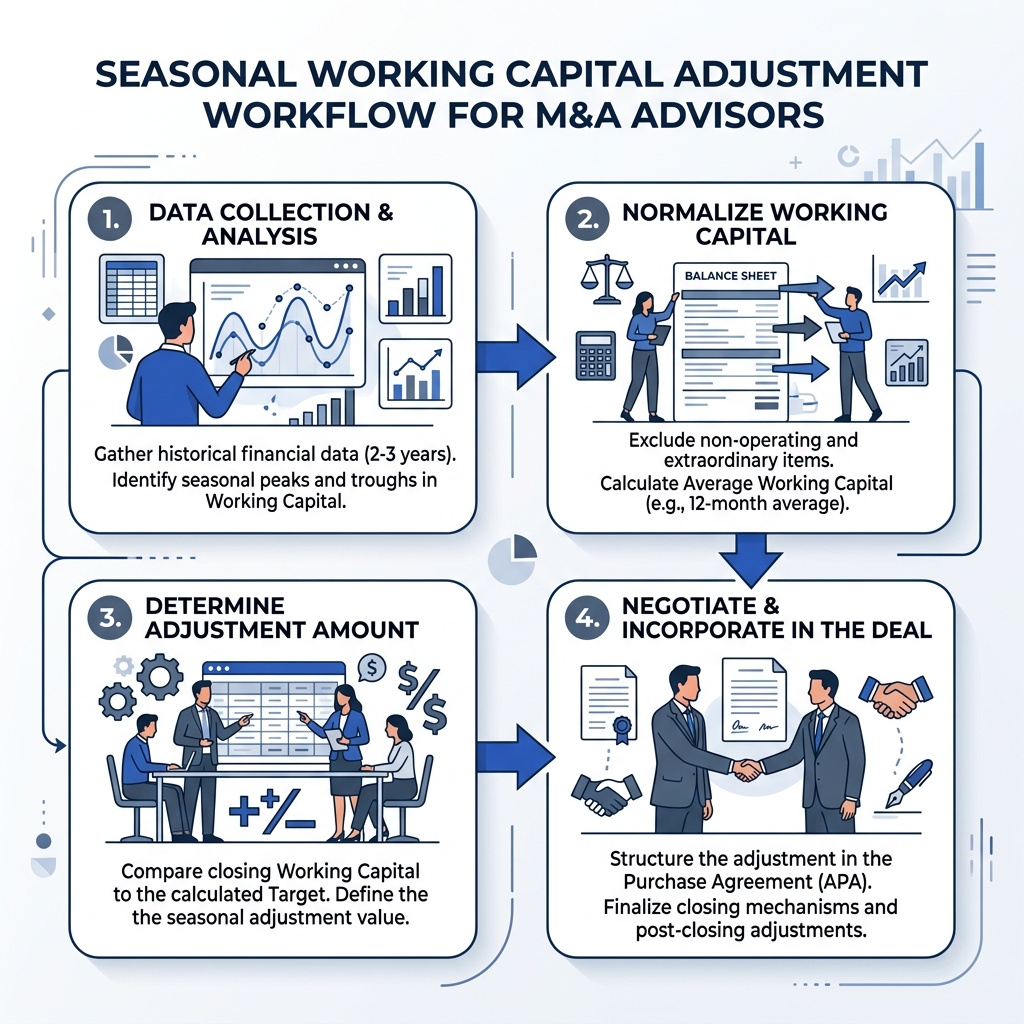
Advisors should follow this checklist to prepare and organize support documents for adjustments.
Phase 1: Auditing Inventory Valuations and Obsolescence
- Audit: Audit warehouse stock logs for the past three years for aging inventory.
- Flag: Flag non-recurring expenses, such as one-time warehouse setups or transition costs.
- Compare: Compare asset books to verify consistency against supplier invoices.
⚠️ Common Mistake: Assuming that standard stock logs automatically reflect the true market value of aging eCommerce products.
Phase 2: Verifying Customer Acquisition Cost (CAC) Trends
- Collect: Collect advertising spend data from Facebook, Google, and influencer accounts.
- Review: Review customer lifetime value (LTV) cohort analytics and churn rates.
- Analyze: Analyze returns and refund logs to determine net sales rates.
⚠️ Common Mistake: Proceeding to market without comprehensive ad account transparency and verified CAC records.
Phase 3: Calibrating Net Working Capital Accounts
- Verify: Verify accounts receivable from payment processors like Stripe and Shopify.
- Apply: Apply chargeback reserve ratios for payment transactions.
- Calculate: Calculate normalized working capital pegs using historic inventory averages.
⚠️ Common Mistake: Using gross sales figures without adjusting for chargebacks and customer refunds.
Phase 4: Compiling eCommerce Due Diligence Folders
- Build: Build clean adjustment schedules reconciling GAAP profit to adjusted EBITDA.
- Link: Link supporting invoices and supply agreements for all owner adjustments.
- Draft: Draft narrative explanations detail why digital marketing perks will cease.
⚠️ Common Mistake: Uploading historical books to the VDR without organizing the customer cohort audit records.
DTC Brand eCommerce vs. Wholesale B2B e-tailer: A Side-by-Side Comparison
DTC Brand eCommerce
- Proprietary: Proprietary products command higher gross margins (60% to 80%).
- High: High dependency on digital acquisition channels, making growth vulnerable to ad cost shifts.
- Requires: Requires continuous product development and influencer marketing to retain share.
- Valuation: Valuation multiples average 6.0x to 8.5x EBITDA due to platform dependencies.
Wholesale B2B e-tailer
- Third-party: Third-party distribution results in lower gross margins (20% to 40%).
- Established: Established corporate client contracts result in highly stable organic search traffic.
- Low: Low product development overheads, acting as a distributor rather than creator.
- Valuation: Valuation multiples average 4.5x to 6.5x EBITDA due to reseller business model.
How AIVI Streamlines Ecommerce Valuation Multiples for Boutique Advisory Firms
Boutique investment banks often spend hours compiling metrics in spreadsheets. By utilizing our buyer persona tuning features, transaction teams can customize deal marketing materials for strategic vs financial acquirers.
In addition, our automated CIM drafting suite helps advisors present risk-adjusted models to buyers. The platform connects customer databases with valuation models, ensuring consistency across all marketing materials. Advisors can verify their calculations by using our EBITDA valuation calculator to ensure their valuations remain defensible.
AI Powered M&A ToolStop Redrafting Deal Memorandums. Automate It.
Inconsistencies between your marketing deck (CIM) and the VDR files destroy transaction momentum. Let AI build your CIM directly from your verified ledger to guarantee 100% data consistency.
Frequently Asked Questions
What is the average eCommerce valuation multiple in 2026?
Digital brands trade at 4.5x to 8.0x EBITDA, depending on gross margins and platform channel stability.
Why do buyers audit customer acquisition costs during due diligence?
Acquirers verify ad channel efficiency to protect themselves from post-closing retention cost increases.
How does inventory health impact an online brand's valuation?
High levels of slow-moving inventory compress margins unless appropriate write-offs are applied.
What EBITDA adjustments are common in consumer brand sales?
Common additions include owner salary corrections, personal travel write-offs, and non-recurring platform migrations.
How does an EBITDA valuation calculator support sell-side marketing?
A calculator automates normalized profit bridge builds, presenting a clean defensible margin profile to potential acquirers.
Disclaimer: The financial and legal information provided in this article does not, and is not intended to, constitute professional legal or financial advice; instead, all information, content, and materials available on this site are for general informational purposes only. Readers should contact their legal counsel or certified public accountant to obtain advice with respect to any particular transaction or regulatory matter.