"Venture Capital VDR Setup: The Startup Due Diligence Playbook

Venture Capital VDR Setup: The Startup Due Diligence Playbook
In the spring of 2026, an early-stage cybersecurity startup in the Mid-Atlantic region was closing a $12M Series A round. The term sheet was signed, and the lead institutional fund began confirmatory diligence. However, the founders had kept their corporate governance documents, patent assignments, and customer agreements in a messy, unstructured cloud folder. It took the startup team three weeks to retrieve and sign missing IP assignment documents, during which the market experienced a localized tech correction. Spooked by the delay and changing market conditions, the investor pulled the term sheet. This preventible setback demonstrates that capital-raising success is as much about process readiness as it is about software metrics.
Free Resource: Prepare your fundraising marketing materials using our secure investor deck preparator to distribute information securely to capital partners.
Why Venture Capital VDR Preparation Matters in 2026
The venture capital ecosystem of 2026 has transitioned to a conservative, metrics-driven investment framework. According to small business advisory records tracked by SBA.gov, early-stage funding timelines have lengthened by nearly 30% compared to previous cycles. Institutional funds conduct deeper technical and operational audits before releasing funds. Founders are expected to present clean, structured investor portals immediately upon signing a term sheet.
Failure to do so signals poor internal controls and organizational drift. Furthermore, compliance rules, such as those governing early investor disclosures under SEC.gov guidelines, mean startups must keep organized records of all historic capital raises. Without an organized environment, early-stage companies risk valuation discounts, deal fatigue, or legal friction that can halt fundraising. Proactive organization protects equity value and accelerates time-to-cash.
Case Studies: Two Raising Outcomes
Our experiences with venture-backed founders highlight how data room organization affects fundraising success.
Case Study: The Disorganized Mid-Atlantic Seed Round
A Mid-Atlantic clean-tech company secured a $3M seed term sheet from an institutional investor. The founders, however, had spent little time on corporate record-keeping. The cap table was tracked across multiple conflicting spreadsheets, and several early employee contracts lacked formal intellectual property assignment agreements. Due to these discrepancies, the investor's legal team extended the audit phase by eight weeks. The delayed closing exhausted the startup's cash reserves, forcing the founders to accept a 25% valuation cut to keep the business running.
How It Should Be Done: The Southeast FinTech Series A Close
In contrast, a Southeast fintech startup prepared their virtual investor portal months before initiating investor outreach. They organized their documents according to standard venture structures, using automated systems to scan for missing founder signatures and cap table inconsistencies. When the lead institutional fund issued the document request list, the founders shared their secure folder within two hours. The diligence team completed their audit in 12 days, allowing the startup to close the $15M round without valuation adjustments.
The Venture Capital VDR Checklist for Founders
Startups must follow a systematic framework to build an investor-ready data room prior to raising capital.
Phase 1: Cap Table & Corporate Governance
- Consolidate Capital Records: Verify that the cap table reflects all historic stock issuances, options grants, and convertible debt structures.
- Organize Board Minutes: Compile all signed board resolutions, shareholder agreements, and historic voting records.
- Verify Incorporation Filings: Confirm that foreign qualification papers and articles of incorporation are current.
⚠️ Common Mistake: Leaving convertible note terms unverified, which leads to cap table math disputes during the final funding rounds.
Phase 2: Intellectual Property & Employee Compliance
- Audit IP Assignments: Ensure that every employee, contractor, and founder has signed an intellectual property assignment agreement.
- Collect Software Licenses: Document all third-party and open-source software dependencies used in the core product.
- Verify Employment Records: Compile payroll histories, benefits agreements, and contractor service contracts.
⚠️ Common Mistake: Missing IP assignments from early freelance developers, creating ownership doubts during technical review.
Phase 3: Customer Contracts & Regulatory Records
- Organize Customer Agreements: Group major client contracts, detailing ARR contributions and contract duration parameters.
- Document Data Privacy Policies: Compile GDPR, CCPA, and SOC 2 compliance reports.
- Assemble Historic Financials: Present audited historical tax filings and clean monthly balance sheets.
⚠️ Common Mistake: Storing customer agreements with unredacted personal information, violating local data protection regulations.
Traditional Folder Structures vs. Investor-Ready VDRs
Unstructured Cloud Storage
- Security: Basic password link sharing with minimal document tracking options.
- Organization: Disorganized folder layouts that lead to search confusion.
- Version Control: Multiple copies of files create cap table alignment disputes.
- Investor Perception: Signals operational immaturity and structural risks.
Venture Capital VDR
- Security: Granular user permission controls with detailed document access auditing.
- Organization: Standardized indexing aligned with venture diligence checklists.
- Version Control: Single source of truth for all corporate legal files.
- Investor Perception: Demonstrates executive capability and readiness for growth.
How AIVI Accelerates Seed and Series A Funding Rounds
Founders utilizing AIVI's deal workspace management dashboard automate the administrative burden of venture capital audits. The system inspects your folders for missing founder signatures, unsigned employee agreements, and regulatory gaps.
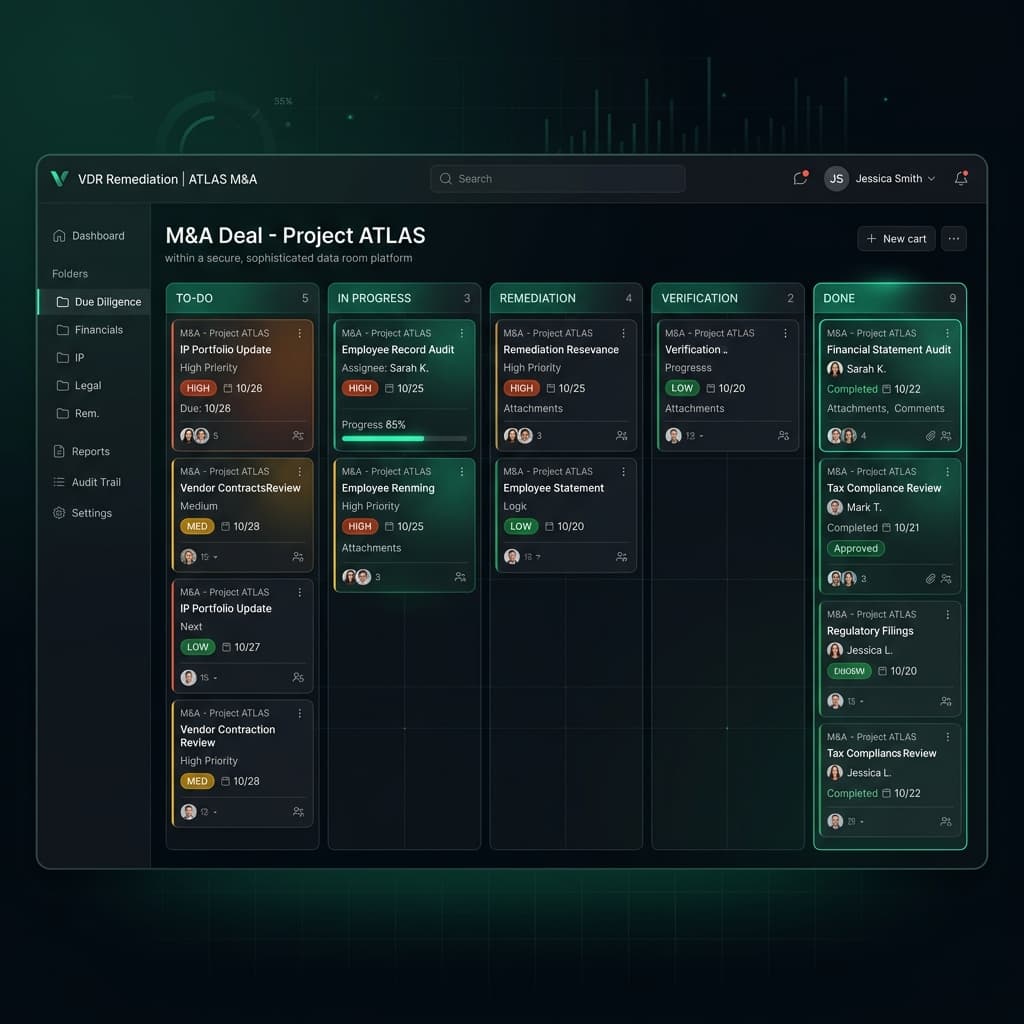
By translating complex document request lists into structured Kanban tasks, AIVI ensures your team resolves operational vulnerabilities before onboarding investment teams. Furthermore, AIVI links with our investor deck preparator, ensuring that financial projections presented to venture partners align with the primary data room files.
AI Powered M&A ToolStop Redrafting Deal Memorandums. Automate It.
Inconsistencies between your marketing deck (CIM) and the VDR files destroy transaction momentum. Let AI build your CIM directly from your verified ledger to guarantee 100% data consistency.
Frequently Asked Questions
What is a venture capital VDR?
A venture capital VDR is a secure virtual repository that startups use to organize corporate, legal, and financial records for review by institutional investors during fundraising.
When should a founder set up their data room?
Founders should begin organizing their folders three to six months before initiating investor discussions, ensuring all corporate legal files are verified early.
What are the most common data room mistakes startups make?
The most frequent errors include storing outdated cap tables, missing IP assignment forms from early developers, and leaving customer information unredacted.
How do VCs audit intellectual property in data rooms?
Investors inspect signed IP assignment agreements from all current and former developers to confirm the startup holds full ownership of its core technology.
Should founders share their data room with all prospective investors?
No. Founders should restrict access to high-level materials during initial pitches, granting detailed VDR access only to firms that issue serious term sheets.
Disclaimer: The financial and legal information provided in this article does not, and is not intended to, constitute professional legal or financial advice; instead, all information, content, and materials available on this site are for general informational purposes only. Readers should contact their legal counsel or certified public accountant to obtain advice with respect to any particular transaction or regulatory matter.